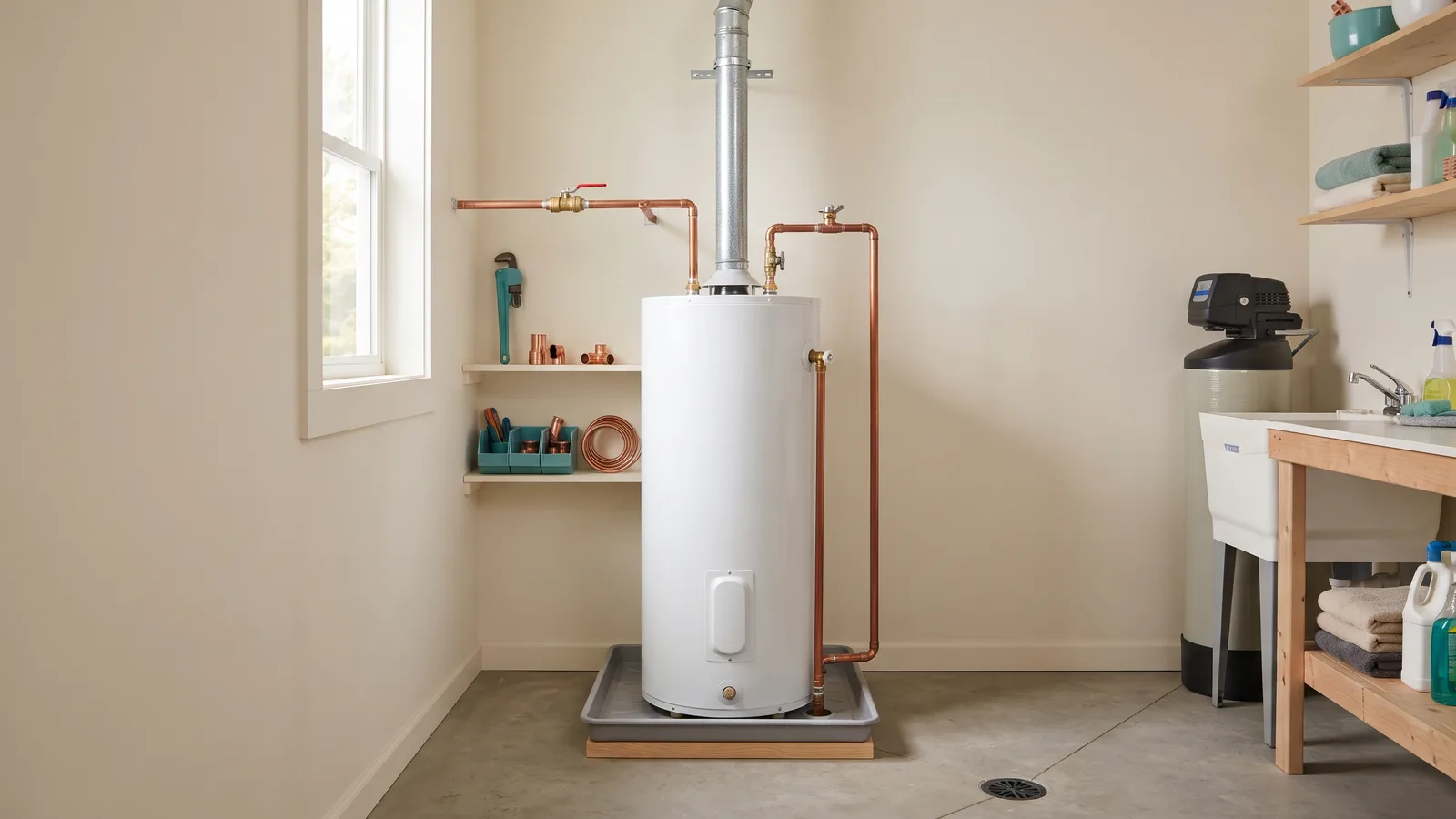
Standard tank replacement is usually the cheapest installed path, tankless sits higher because the quote can include venting and fuel changes, and heat pump installs sit higher again because the fit check is stricter. The useful next step is to confirm the exact scope, permit assumption, access limits, disposal, electrical or gas changes, and inspection handling before you compare numbers.
For homeowners comparing water heater installation quotes, the useful starting point is not the tank label but the scope: replacement versus conversion, permit risk, access and whether the heater fits the space. See Water Heater Guide for the current service details.
Water Heater Installation Explained
Water Heater Guide keeps the job focused on scope first, because a useful quote is about more than a headline number. The opening question is whether the work is a like-for-like tank swap, a tankless conversion, a heat pump fit or a repair that should be checked before replacement.
That framing matters because the same appliance can need different labour, parts and approvals depending on location, access and the work already on site. A quote that names the heater type, fuel path, disposal, permit assumption and inspection handling is far easier to compare than a one-line estimate.
- Current heater type and fuel source
- Location, access and working space
- Permit and inspection assumption
- Removal, disposal and clean-up
Cost bands by job type
The guide uses broad installed ranges so readers can tell whether a quote is roughly in the right lane before they get lost in line items. HomeGuide supplies the standard tank and tankless planning bands, while Angi supplies the heat pump planning band. Those figures are a first pass, not a final quote.
A standard tank swap tends to stay near the lower end when the heater type, fuel path and connections stay familiar. The number rises when the installer has to account for venting changes, gas line work, electrical capacity, condensate routing, access limits or a different mounting position.
- Standard tank replacement: $600-$3,100 installed
- Tankless installation: $1,400-$5,600 installed
- Heat pump installation: $3,200-$4,700 installed
Permits and incentives are local or current only
Water heater permit rules are local, not national. The approved reference set includes Oregon guidance that lists water heater replacement as plumbing work requiring a permit, which is a good example of why city or county checks matter before a homeowner assumes a simple swap is exempt.
The same caution applies to incentives and standards. The US Department of Energy says the final residential water heater standards it published in 2024 are due to start compliance in 2029 for the covered standards. The IRS page reviewed for this build says the Energy Efficient Home Improvement Credit applied to qualifying improvements made through December 31, 2025.
That is the safe reading for 2026. Do not assume a live federal heat pump credit without current IRS confirmation, and do not assume a local permit rule from one state applies everywhere else.
How to compare tank, tankless and heat pump options
The right heater is the one that fits the household and the install location. Tank systems are easiest to compare when the broad format stays the same. Tankless systems need a harder look at whole-home demand, venting and gas or electrical capacity. Heat pump units need a fit check for room volume, ambient conditions, condensate and noise.
If the quote simply says replace the unit, it is too thin for comparison. The useful version names the heater type, fuel source, location, access, permit assumption, inspection handling and any extra work that may be needed after the old unit is removed.
- Write down the current heater type, approximate size, location and symptoms.
- Ask whether the quote is like-for-like or a conversion.
- Check whether permit, disposal, venting or electrical work is included.
- Only then compare the installed cost band against the live guide.
How to brief the plumber before the first call
Before you ask for a price, write the problem as a scope. A better brief gives the installer enough context to answer with a real quote instead of a vague price range. It also makes it easier to compare multiple quotes because each installer is pricing the same job.
The fastest brief starts with the current heater type, fuel and location, then adds the symptom, age if known and whether the work is urgent. After that, ask the installer to separate labour, materials, permit allowance, disposal and exclusions so the final number is easier to judge.
- State the current heater type, fuel and location
- Describe the symptom and whether the job is urgent
- Say whether you want repair, replacement or a conversion quote
- Ask the installer to break out labour, materials and exclusions
- Describe the job. Tell the plumber the current heater type, fuel, location and the problem you are trying to solve.
- Check the scope. Ask whether the quote is a like-for-like replacement, a conversion, or a repair check before replacement.
- Confirm the extras. Make sure permit, disposal, venting, electrical and inspection handling are clearly stated.
- Compare the numbers. Use the broad cost bands to see whether the quote is in the right lane before you approve the work.
| Scope item | Why it matters | What to ask |
|---|---|---|
| Current heater type | Shows whether the quote is a tank swap, tankless conversion or heat pump fit | Is this like-for-like or a different heater type? |
| Location and access | Tight closets, garages and basements can add labour and safety checks | Will access change the method or the crew size? |
| Permit and inspection | Local rules can change the job even when the appliance category stays the same | Does the quote assume a permit or inspection? |
| Electrical and gas assumptions | Tankless and heat pump installs often need extra scope here | Is extra wiring, gas work or panel work included? |
| Removal and disposal | Disposal can be included or excluded, which changes the final number | What happens to the old unit and waste? |
Common questions
Do I need a permit to replace a water heater? Often yes, but the rule is local. The Oregon guidance in the approved reference set explicitly lists water heater replacement as permit-required plumbing work, which is a good example of why city or county checks matter.
Is a tankless water heater worth the higher install price? It depends on installed cost, fuel type, demand, venting, maintenance and any gas or electrical upgrade scope. The higher installed band is only useful if the conversion still makes sense for the home.
Can I still claim a federal heat pump water heater credit in 2026? Do not assume so. The IRS page reviewed for this build says the credit applied to qualifying improvements made through December 31, 2025. Check current IRS guidance before relying on any incentive.
This guide covers installed cost bands, permit checks, tankless and heat pump fit, and the questions to ask before approving work.